
Tire Pressures 101: Getting it Right
Do you leave off the decision of what pressure your tires are run at to the guy with the air compressor (popularly called vulcanisers in Nigeria)? You may be making a costly mistake! A good portion of cars on the road are run at incorrect tire pressures and this has consequences. According to consumerreports.org vehicles with under-inflated tires are 3times more likely to be in an accident. Under-inflation increases the surface of the tire in contact with the road which in turn increases friction. As you know, friction = HEAT. An overheated tire runs the risk of structural failure with a blowout being the worst outcome. Under inflation will also reduce fuel economy.
 How about over-inflation? It doesn’t help either as it increases tire wear, reduces the ability of a tire to absorb the shock of hitting a bump or pothole, extends braking distance and affects ride quality. I recall how a vulcaniser and a standby motorist, passionately tried to convince me to go up to 50PSI on my car (which has a rating of front-30psi and rear-29psi). According to the duo, my car would never be the same if I did, perhaps it won’t. lol.
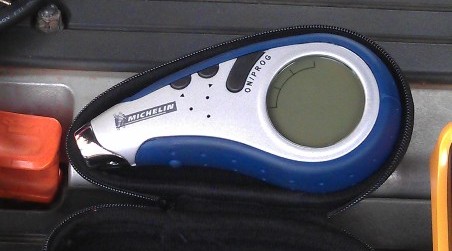
It’s worth remembering that tires come second place only to brakes in vehicle safety. 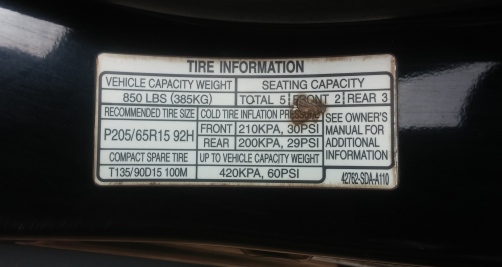 Thus while you may not have an air compressor to inflate your tires to optimum pressures, I consider a tire pressure gauge an essential tool for motorists especially in Nigeria. Should you consider investing in a tire pressure gauge (you should), do get one with good reviews. You may check out this Tekton brand from Konga. It has good reviews. You can always find your recommended tire pressures on the driver’s door panel or in the owner’s manual.
Another wrong but widely practiced habit is to inflate tires to the pressure stamped on the side wall. The pressure listed on the stamp is the maximum cold pressure which should NOT be exceeded. You don’t really want to be playing your radio at its highest volume every time, do you? Why use something at the upper limit of its design?
Ideally, tires should be gauged while cold i.e. when they are at same temperature as outside air. Driving heats up tires and gauging your tires when hot would give inaccurate pressure readings. This is because air expands with heat and expansion would lead to a higher pressure. If you must gauge your tire hot, do factor in that tire pressures increase by 4-6psi due to driving. My practice in inflating and gauging tires is to slightly exceed the recommended figure on my way home at the end of the day and then using my pressure gauge; make adjustment in the morning of the next day. This is because I do not own a compressor yet.
Thank you sir for this important information and others… I was in a conversation with a friend the otherday concerning tire pressure. He believes the max psi on tires should be followed rather than a car manufacturer’s recommended pressure. That, the manufacturer’s recommended psi only affect tires from factory with a new car and not other tires in the market. For instance, if max psi on a tire is 45, that tire can be inflated to 40 or so, allowing a little for air expansion. What is your take on this?
Thank you Destiny I for reading and finding this helpful.
As regards your query, your friend is totally wrong. The PSI stamp on tires represent the maximum pressure which should not be exceeded for the tire when cold. Put in another way, a tire stamped 45PSI means that the manufacturer of the tire is warning that on no account should 45PSI be exceeded on the tire when cold ( cold means a tire that has not been driven and is at same temperature with surrounding). This is the design limit of the tire!
On the other hand, the recommended tire pressure by the car manufacturer represents the optimum PSI to strike a fine balance for best handling, minimum tire wear, fuel economy etc. for you the driver.
You should always go with the tire pressure recommended by your car manufacturer and also buy the recommended tires. Hope this helps, happy to be of assistance!
Wow
Nice information dude. Will get one immediately. Keep up the good work you are doing here.
Where can I get a tire pressure Guage? And what’s the average cost of a good one?
Here’s a good one I can vouch for from Konga it goes for NGN4000.It’s from the Tekton, they make good products